IoT-Based Water Quality Monitoring & Smart Peripheral Control — hero banner
    Back to Projects
    Aquatech
    SDG 6
    SDG 9
    SDG 12
    SDG 13

    IoT-Based Water Quality Monitoring & Smart Peripheral Control

    Sustainable water management through real-time monitoring, automation, and remote control for aquaculture operations.

    My Role
    Product Manager & Technical Lead
    Deployment
    8 Districts

    Overview

    This innovative IoT-based water quality monitoring system revolutionizes aquaculture and agricultural water management by providing continuous, real-time monitoring of critical water parameters. The system combines advanced sensor technology with intelligent automation to maintain optimal water conditions while minimizing energy consumption and environmental impact.

    The Problem

    Small and mid-scale aquaculture operations across Bangladesh account for a significant share of national protein supply and rural livelihoods. The economics of that sector are brittle: a single dissolved-oxygen crash overnight can wipe out a pond in hours, and farmers rarely have the tools to catch it before it's too late. Traditional monitoring is a kit, a notebook, and a torch at 3am — which is exactly when oxygen troughs are worst.

    Commercial water-quality sensors exist, but they assume three things that are not true for most Bangladeshi farms: reliable mains electricity near the pond bank, consistent cellular coverage, and an operator comfortable reading graphs in English. Any one of those gaps is a blocker. All three together make most off-the-shelf solutions unusable.

    We designed the system to fail gracefully against each of those gaps: solar-and-battery power as standard, hybrid LoRaWAN/WiFi/cellular connectivity, and a UI that talks in the farmer's vocabulary (pond-by-pond, sensor-by-sensor, action-by-action) rather than in dashboard-speak.

    App Showcase

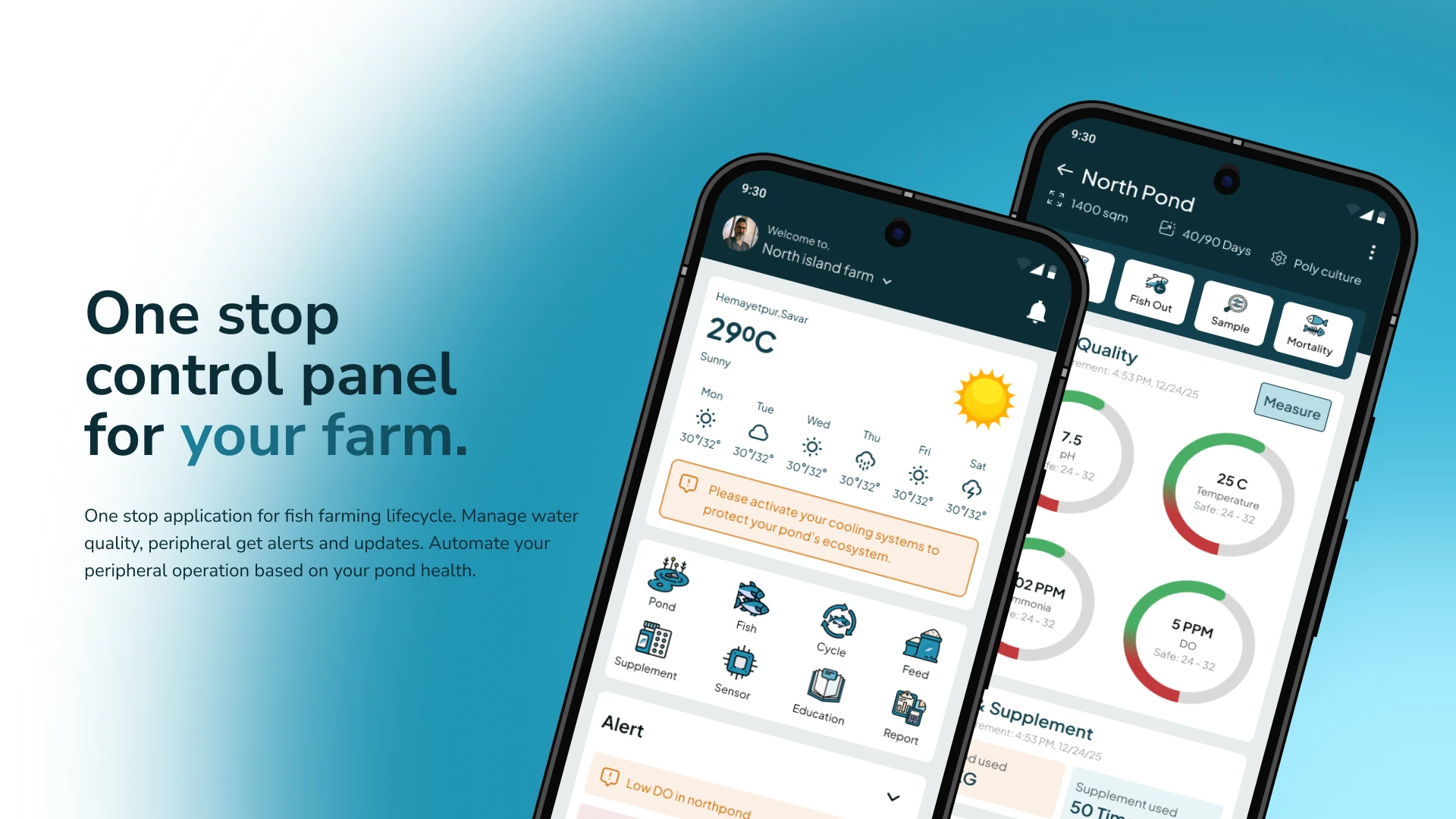
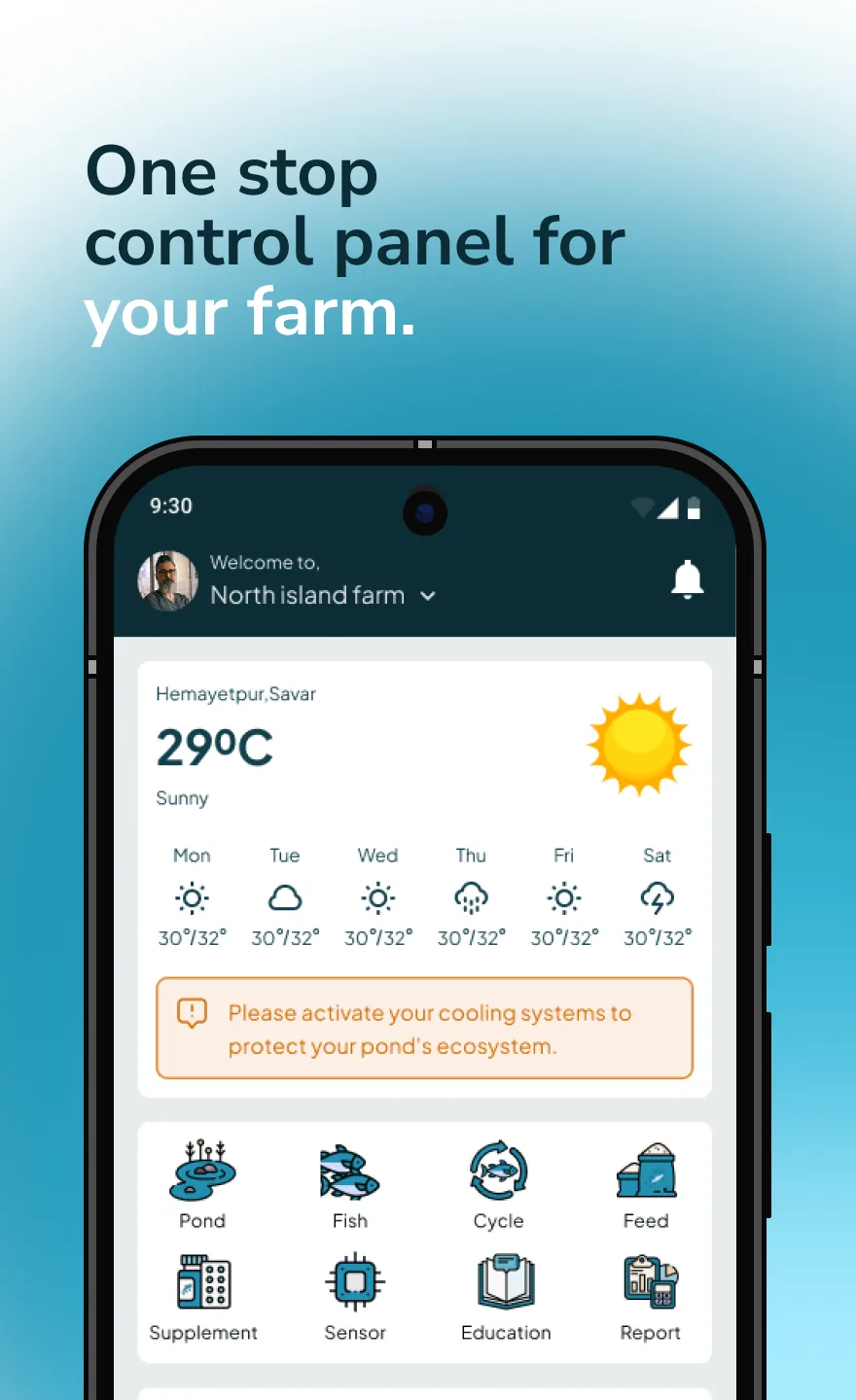
    Farm Dashboard
    One stop control panel for your farm
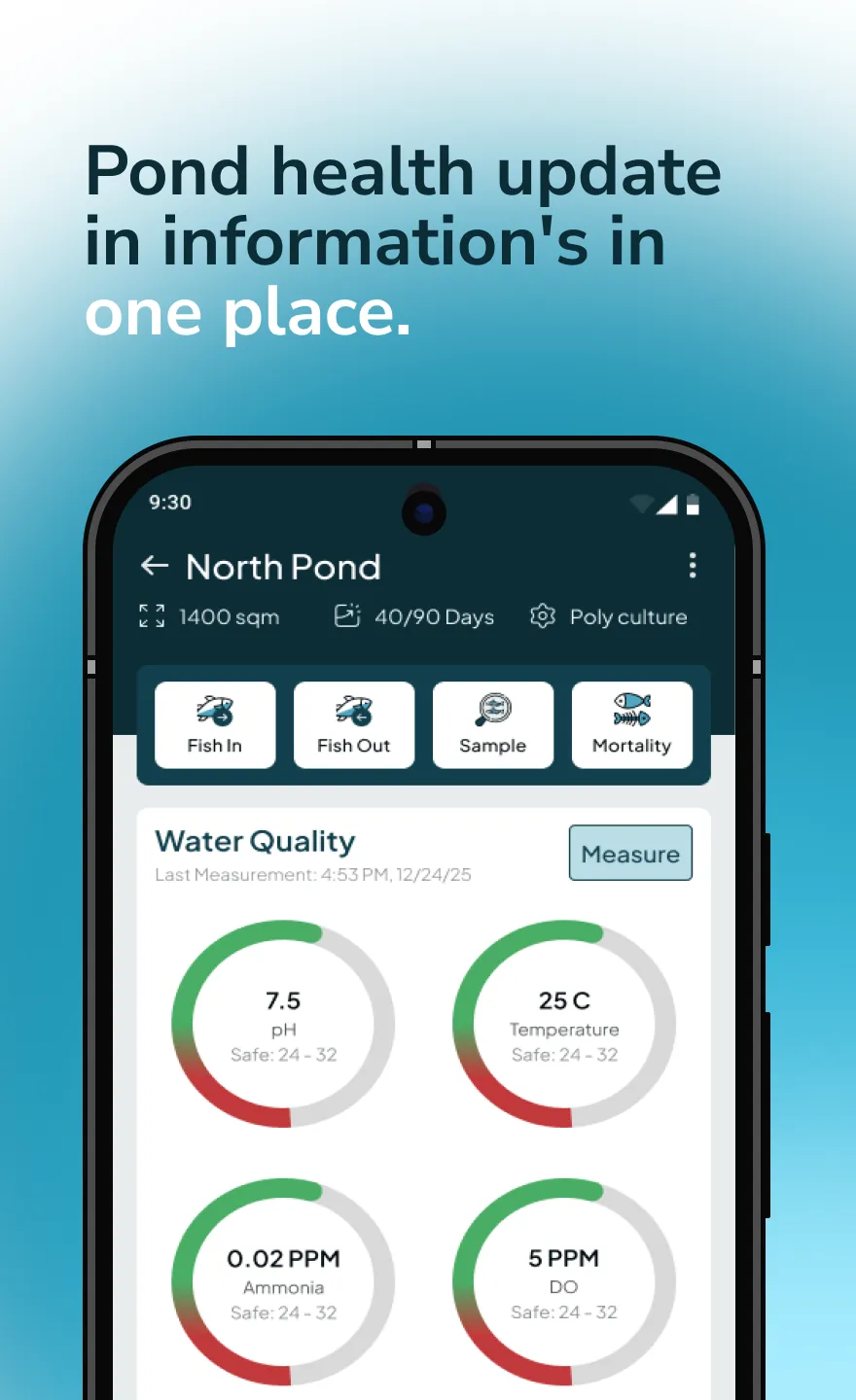
    Pond Health
    Pond health update in one place
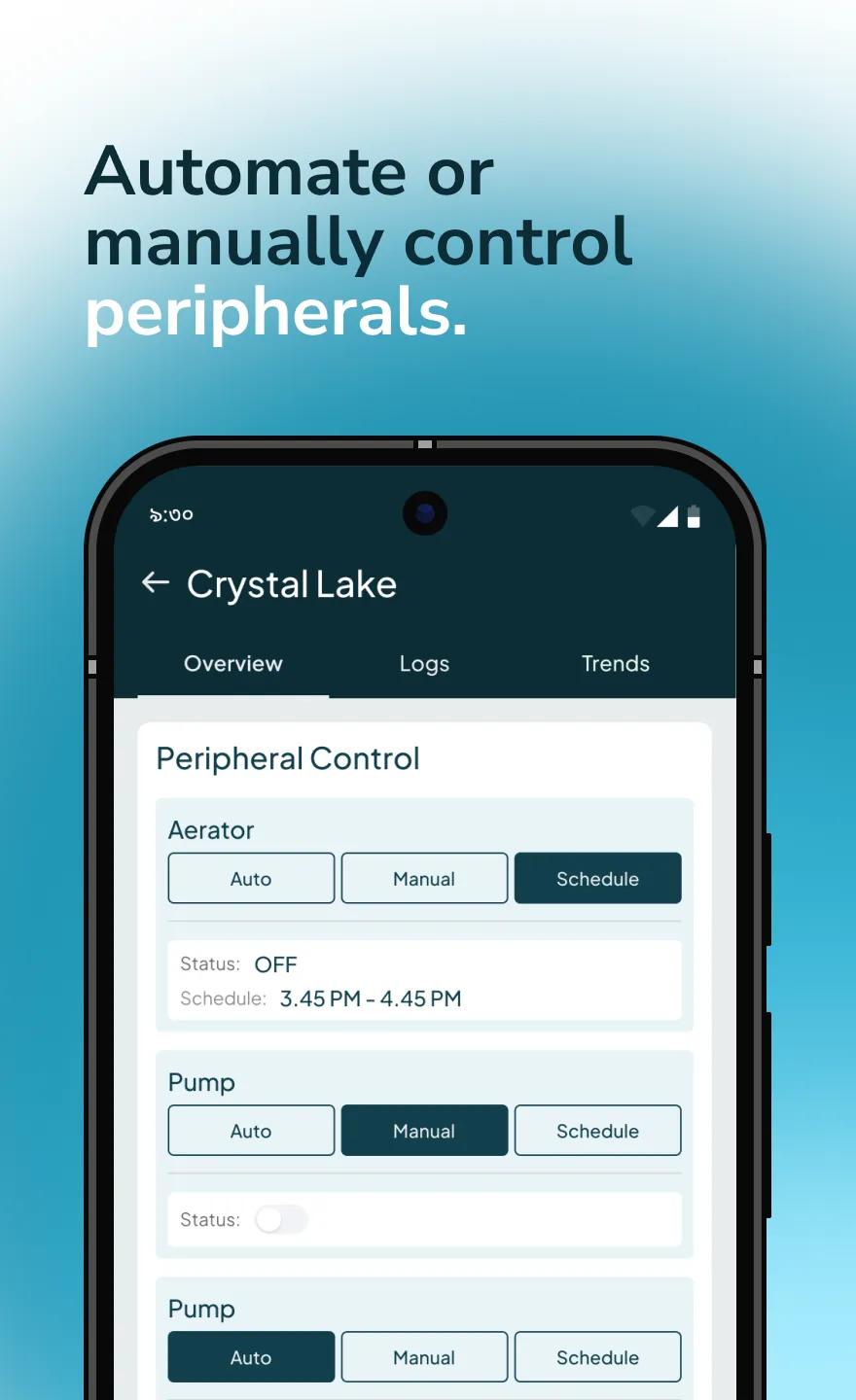
    Peripheral Control
    Automate or manually control peripherals
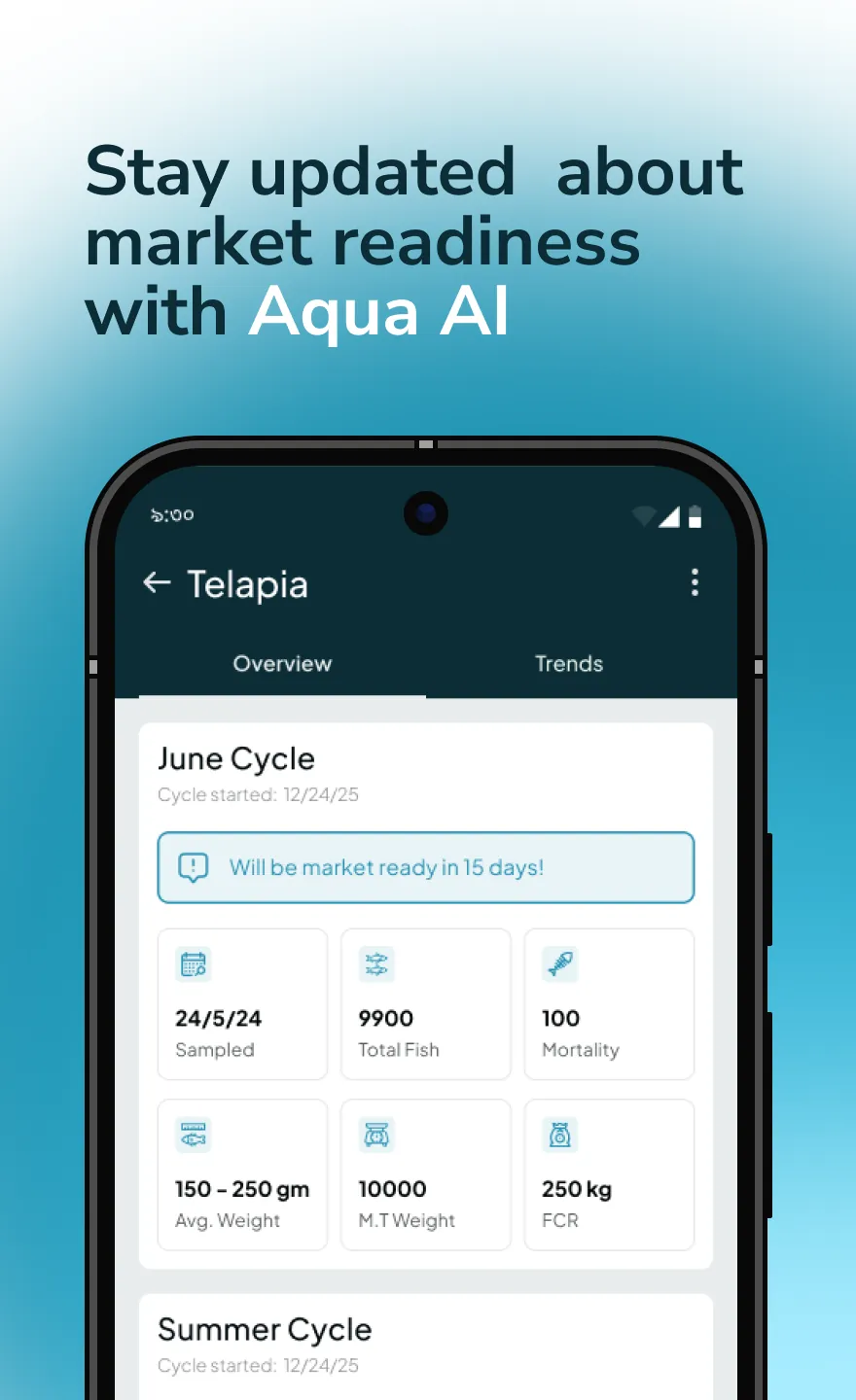
    Aqua AI
    Stay updated about market readiness with Aqua AI

    Core Features

    1. 01

      24/7 real-time water quality monitoring (pH, DO, Ammonia, Temperature)

    2. 02

      Smart peripheral control with threshold-based automation

    3. 03

      Remote access via mobile/web dashboard with offline capabilities

    4. 04

      Up to 20% energy savings through optimized aerator operations

    5. 05

      Increased yield & survival rates with stable water conditions

    6. 06

      Historical data analysis and trend prediction

    Architecture Decisions

    Threshold-based aerator control loop

    The economic mistake aquaculture farmers make most often is running aerators for too many hours out of habit rather than out of need — a pattern that consumes a large fraction of their monthly electricity bill. The system runs aerators only when dissolved-oxygen drops below a configurable band, with hysteresis to prevent rapid cycling, and with a hard floor that keeps aerators on during species-critical windows regardless of DO readings. A single policy change typically produces most of the energy saving.

    Solar-first power profile

    Every bank-side node is designed to run indefinitely from a small PV panel and lead-acid battery sized for a three-day autonomy window. The edge logic degrades gracefully when battery is low: telemetry cadence drops from 30s to 5 minutes, peripheral control continues at full fidelity, and a 'reduced mode' indicator surfaces on the dashboard so the operator knows why readings look sparse.

    NGO-partnered onboarding

    Technology adoption is the harder half of any rural IoT deployment. We partnered with six established local NGOs already embedded in the target districts and co-designed the training curriculum around their field workers, not around our product managers. The product was modified in response — a simpler three-tier dashboard, pre-loaded pond profiles, and a bilingual UI — to match how the NGO trainers actually explained it.

    Aqua AI advisory layer

    On top of the raw telemetry we layered a lightweight advisory model that correlates pond history with local weather and species biology to surface qualitative alerts — 'market readiness window likely opening next week', 'feeding pattern suggests early stress'. The goal is not to replace the farmer's judgement but to give them a second opinion they can act on. Accuracy on coarse predictions (weeks-out market windows) was materially higher than on fine-grained ones (day-ahead DO), and we surfaced confidence intervals in the UI accordingly.

    Tech Stack

    • IoT
    • Real-time Monitoring
    • Mobile Dashboard
    • Automated Control
    • Data Analytics
    • Python
    • React Native
    • MQTT

    Challenges & Solutions

    Challenge

    Ensuring sensor accuracy in harsh aquatic environments

    Solution

    Developed rugged, waterproof sensors with self-calibration features

    Challenge

    Managing power consumption for continuous monitoring

    Solution

    Implemented energy-efficient edge computing with solar power options

    Challenge

    Integrating with diverse existing farm equipment

    Solution

    Created universal adapter system for equipment integration

    Challenge

    Providing reliable connectivity in remote rural areas

    Solution

    Deployed hybrid connectivity solutions (LoRaWAN, WiFi, cellular)

    Challenge

    Training farmers on new technology adoption

    Solution

    Conducted comprehensive training programs with local NGOs

    Results & Impact

    • 20% reduction in energy consumption

    • 35% improvement in fish survival rates

    • 50% reduction in manual monitoring

    • Deployed across 8 districts

    • Partnership with 6 NGOs

    Lessons Learned

    1. 01

      Hardware fails first; plan for field replacement. Every sensor should be swappable in under 60 seconds, without tools, without configuration, with a farmer holding the spare.

    2. 02

      Calibration drift in biological ponds is faster than in ideal water. Monthly auto-calibration routines are not optional — and surfacing when a sensor is in its calibration window is essential so operators don't misinterpret the readings.

    3. 03

      Language matters. Shipping a fully bilingual UI with local-idiom translations done by NGO trainers produced a visible jump in retention compared to the earlier English-only prototype.

    4. 04

      Predictive features earned the trust of farmers only after the product proved useful at the basic level. Ship the simple feedback loop first; layer intelligence on top once the foundation has earned credibility.

    Interested in this project?

    © 2026 Mushfiqur Rahaman · Building for a sustainable future