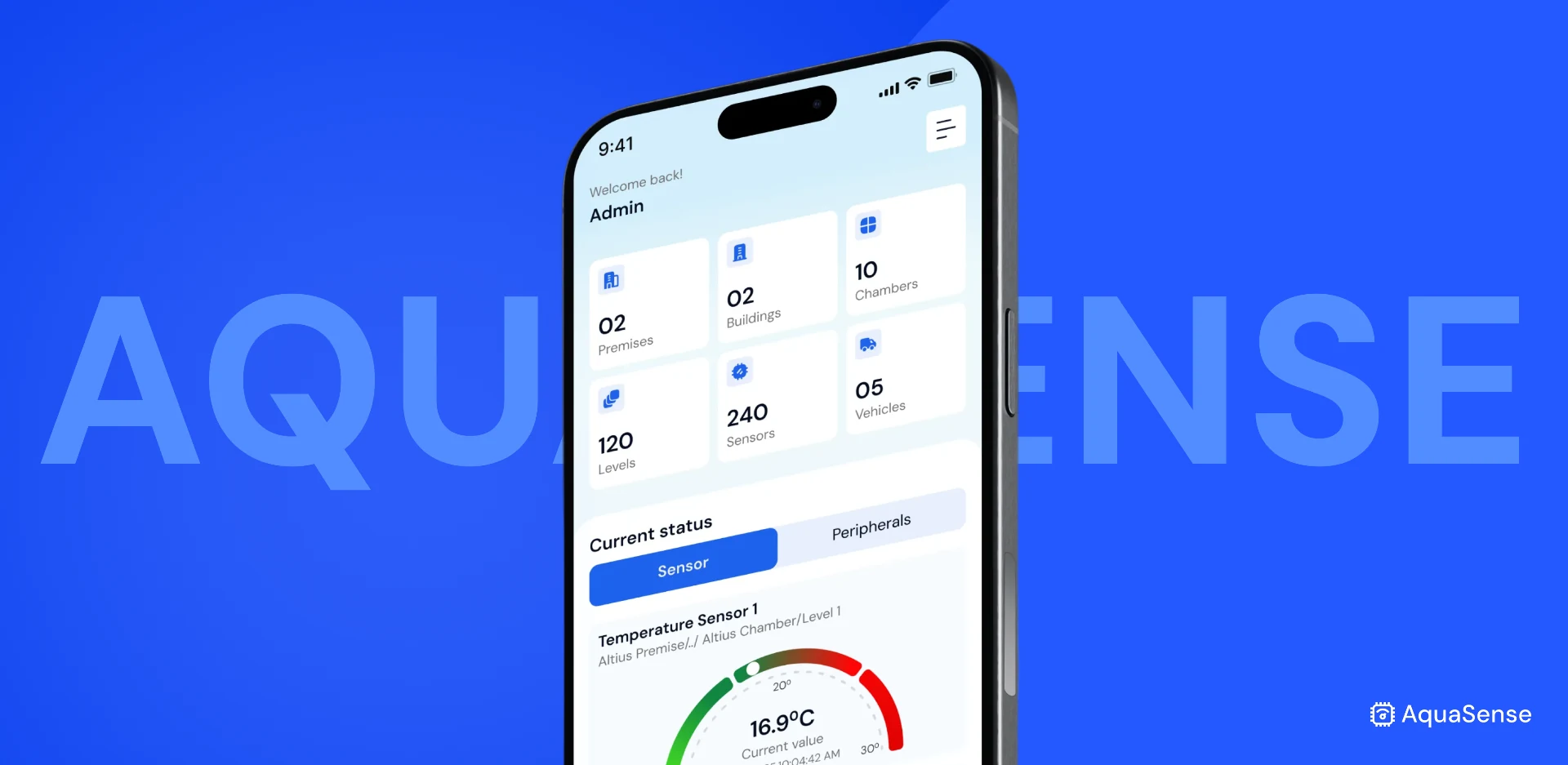
Cold Storage Monitoring & Control System — hero banner
    Back to Projects
    Cold Chain / IoT
    SDG 9
    SDG 12
    SDG 13

    Cold Storage Monitoring & Control System

    AquaSense — A complete environment monitoring & control system for cold storage facilities with real-time alerts and remote peripheral management.

    My Role
    Product Manager & Technical Lead
    Deployment
    15+ Facilities

    Overview

    The Cold Storage Monitoring System (AquaSense) is a comprehensive IoT-based solution designed to monitor and control environmental parameters in cold storage facilities. The system provides real-time tracking of temperature, humidity, carbon dioxide levels, and other critical parameters across multiple premises, buildings, chambers, and levels. With intelligent alerts, automated peripheral control, and powerful reporting, operators can ensure product quality, reduce energy waste, and prevent costly spoilage.

    The Problem

    Commercial cold-storage facilities across South Asia typically run on decades-old refrigeration equipment paired with manual logbook-based monitoring. An operator walks the chambers two or three times a day, writes temperature and humidity readings into a paper log, and hopes nothing has drifted in between. When a compressor fails at 2am — as they do — the first signal is usually an odor the following morning, by which time several tonnes of fish, vegetables, or pharmaceuticals have already crossed the spoilage threshold.

    The problem is not technology. Industrial-grade sensors have existed for years. The problem is that existing monitoring systems assume stable grid power, reliable connectivity, and operators who speak the software's language — none of which is a safe assumption in the facilities we deployed into. We needed a system that behaved like a piece of industrial equipment: dependable, legible, and tolerant of the environment it actually operates in.

    AquaSense was designed from the start as a tool for two distinct audiences: the line operator who needs to know whether chamber 3 is safe right now, and the facility owner who needs to know whether their chain as a whole is operating within contractual SLAs. The product surfaces the same underlying data at two different levels of abstraction.

    App Showcase

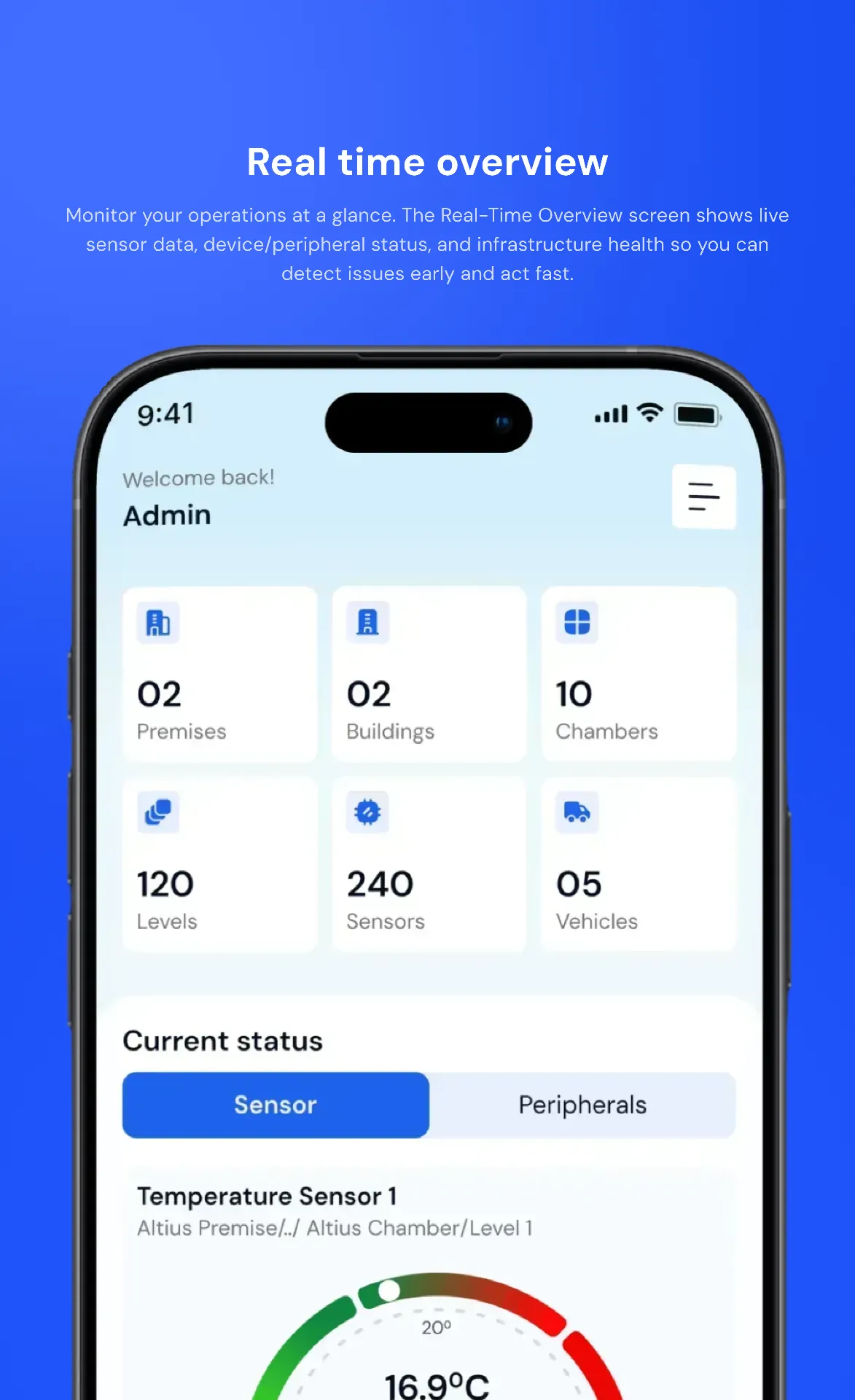
    Real-time Overview
    Real-time overview with live sensor data
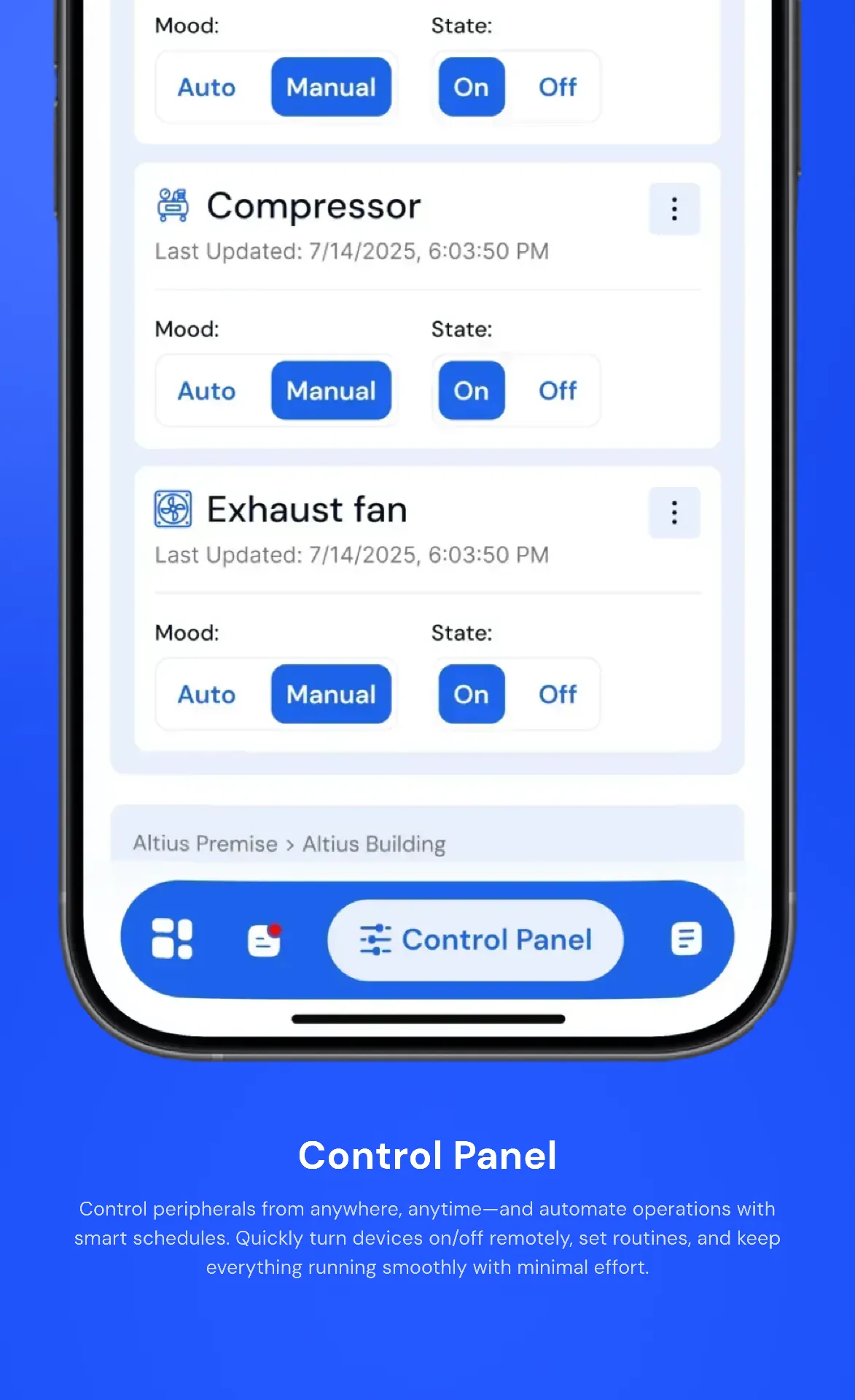
    Control Panel
    Remote peripheral control
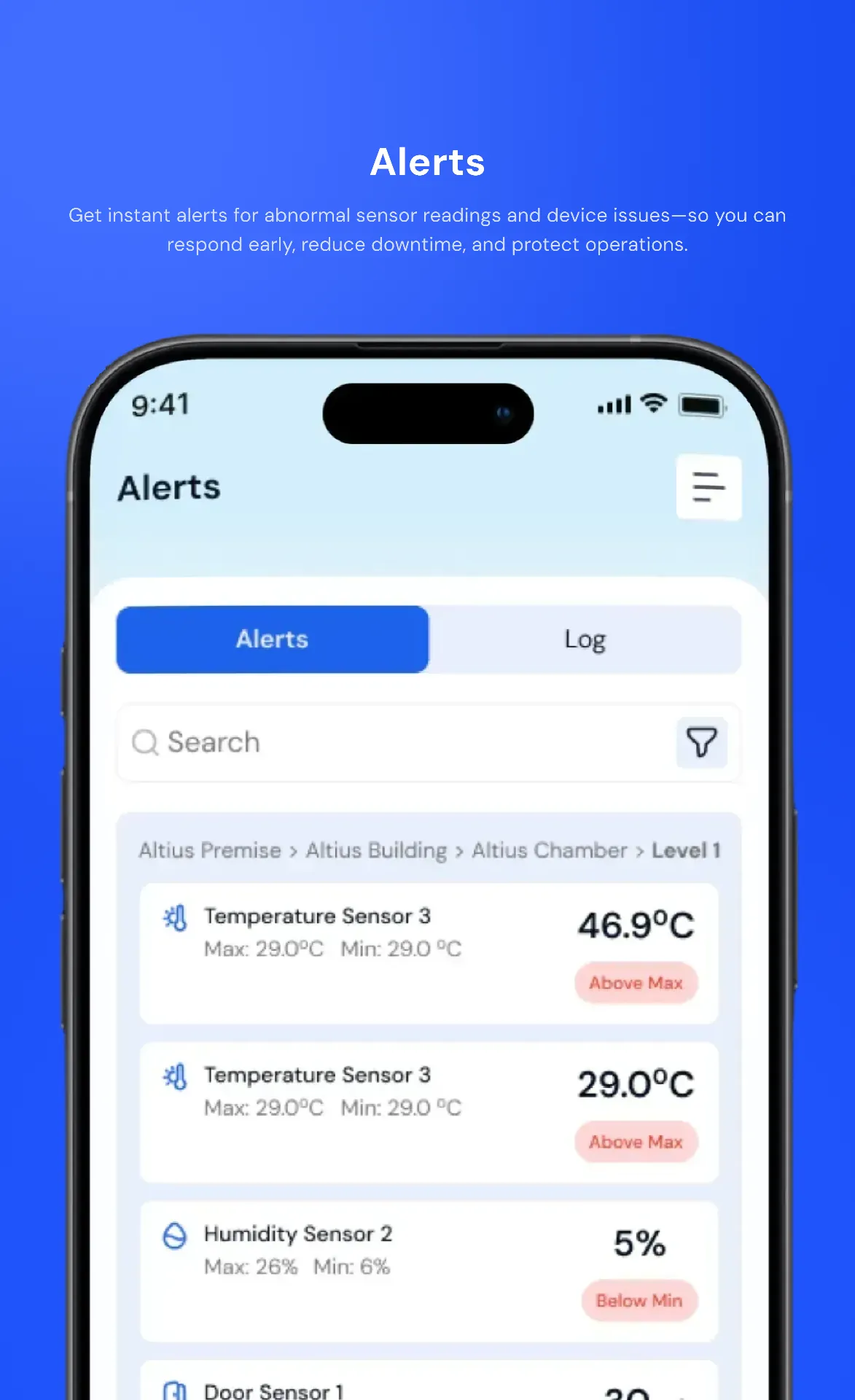
    Alerts System
    Intelligent alerts system
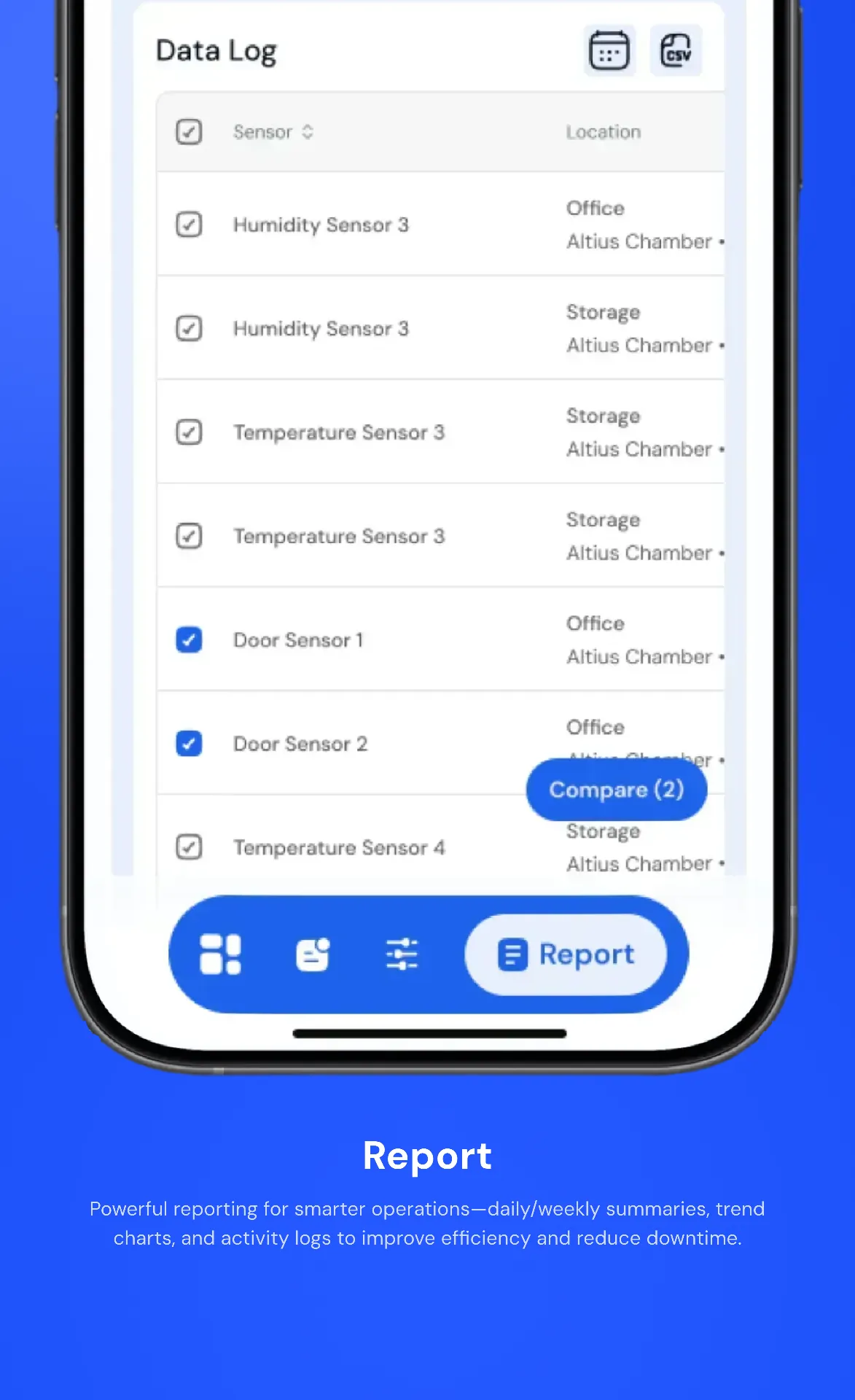
    Reporting
    Reporting & data logs

    Core Features

    1. 01

      Real-time monitoring of temperature, humidity, CO₂, and other environmental parameters

    2. 02

      Remote control of peripherals — compressors, ACs, exhaust fans with Auto/Manual modes

    3. 03

      Intelligent alerts & notifications for abnormal sensor readings

    4. 04

      Multi-level infrastructure management — Premises, Buildings, Chambers, Levels

    5. 05

      Comprehensive sensor data logging with historical trend analysis

    6. 06

      Powerful reporting with daily/weekly summaries and trend charts

    Architecture Decisions

    Local-first data plane

    Every gateway buffers the last 48 hours of sensor readings to on-disk SQLite and exposes a local HTTP endpoint on the facility Wi-Fi. The operator's mobile app prefers the local endpoint and only reaches to the cloud when the gateway is unreachable. When internet returns, the gateway back-fills cloud with a paced replay so the central broker is never DDoSed by reconnections. The practical result: the product keeps working when the ISP does not.

    Separated control and telemetry planes

    Telemetry flows over QoS 0 MQTT with no retention and a 15-second batched cadence — cheap, lossy-by-design, and perfectly adequate for trend data. Control commands flow over QoS 2 with end-to-end UUID-based acknowledgement, never retained, and rejected on the device side if they arrive past a server-stamped validity window. Operators never get a false 'success' for a compressor command that silently failed in transit.

    Hierarchical facility model

    The data model mirrors the physical layout operators already think in: Premises → Building → Chamber → Level. Every UI filter, every alert scope, and every access-control rule collapses into a prefix match. A regional manager gets read-only visibility across all their sites; a line operator gets control authority scoped to their chamber. The hierarchy also maps directly into the MQTT topic tree, so authorization rules fall out for free.

    Escalating alert discipline

    Early deployments produced so many alerts that operators silenced the app entirely. We rebuilt the alert engine around three rules: (1) every alert has an explicit severity tier, (2) a Warning only promotes to a Critical after a sustained threshold breach, not a transient spike, and (3) escalations fan out through SMS → WhatsApp → phone call with acknowledgement gating each step. Alert volume dropped by about 70% after the change and critical-alert response time improved materially.

    Tech Stack

    • IoT Sensors
    • MQTT
    • React Native
    • Node.js
    • PostgreSQL
    • Real-time Monitoring
    • Edge Computing
    • REST API
    • Push Notifications

    Challenges & Solutions

    Challenge

    Maintaining sensor accuracy in extreme cold environments (-30°C to +25°C)

    Solution

    Deployed industrial-grade sensors with cold-resistant enclosures and auto-calibration

    Challenge

    Ensuring reliable connectivity across large warehouse facilities

    Solution

    Implemented mesh networking with LoRaWAN and WiFi fallback for full coverage

    Challenge

    Managing high-frequency sensor data without overwhelming the system

    Solution

    Built edge computing nodes for local data aggregation and efficient cloud sync

    Challenge

    Coordinating automated peripheral control with manual overrides safely

    Solution

    Designed a priority-based control system with safety interlocks for peripheral management

    Challenge

    Providing actionable alerts without causing alert fatigue

    Solution

    Developed smart alert rules with escalation levels and configurable thresholds

    Results & Impact

    • 35% reduction in product spoilage

    • 20% decrease in energy consumption

    • 90% faster response to critical deviations

    • 240+ active sensors deployed

    • 50% reduction in manual inspections

    Lessons Learned

    1. 01

      Operator-legibility matters more than dashboard beauty — a three-dot status header (sensor alive / link alive / data fresh) prevented more support calls than any backend rewrite.

    2. 02

      Pushing configuration changes in real time was a mistake. A pull-based, versioned, signed manifest is slower-feeling and dramatically safer.

    3. 03

      Reserve 10% of your engineering budget for power. UPS capacity, safe-shutdown sequences, and clock persistence after brownouts are not polish — they're correctness.

    4. 04

      The MQTT topic hierarchy outlived two iterations of the codebase. Invest in it early, enforce naming conventions in CI, and resist the urge to encode metadata into the topic itself.

    Interested in this project?

    © 2026 Mushfiqur Rahaman · Building for a sustainable future